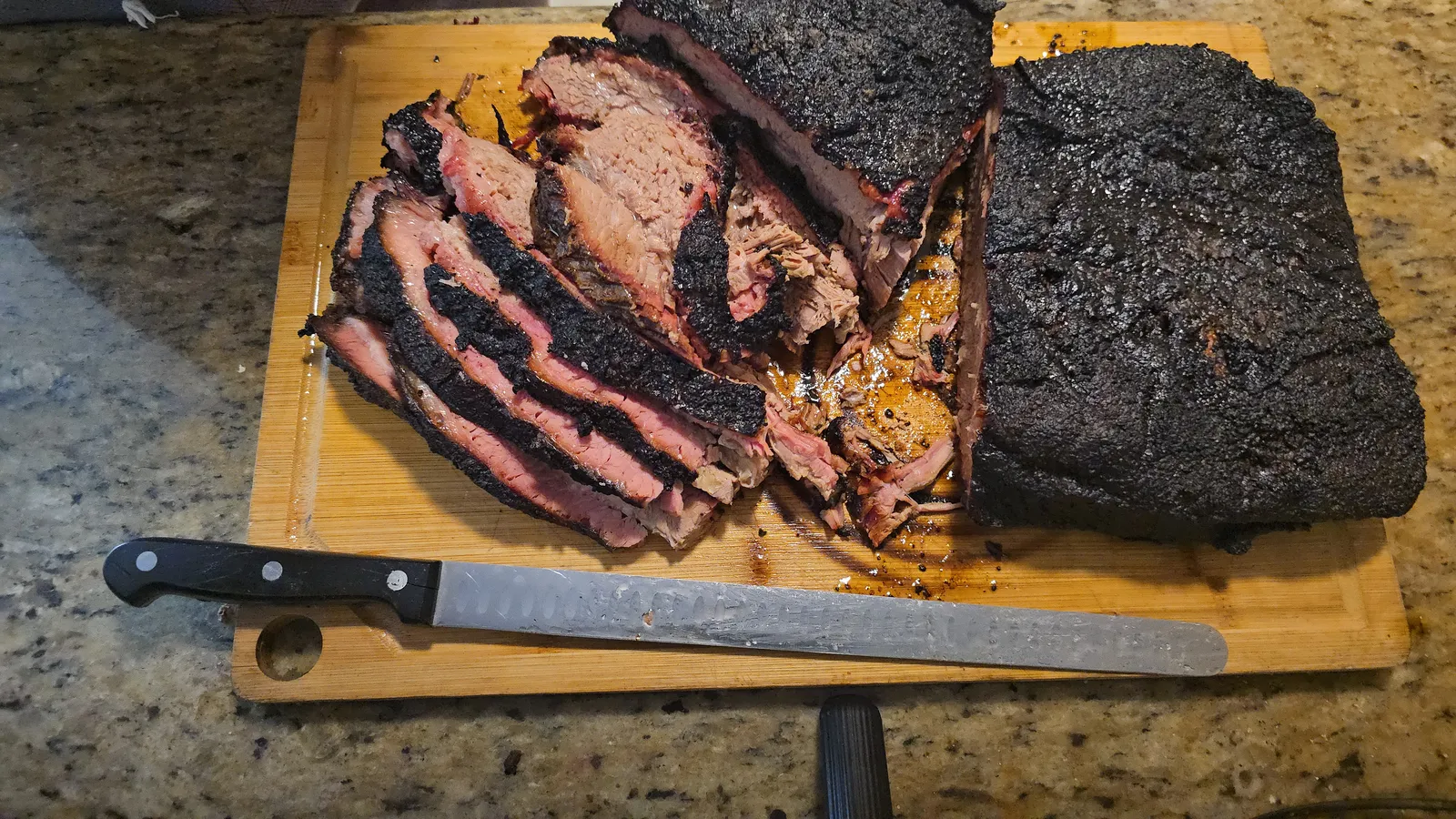
Walk into any serious Texas BBQ joint and you'll smell it before you see it: the deep, earthy sweetness of burning post oak. It's not just tradition — there are real reasons why Texas pitmasters choose post oak over hickory, mesquite, or fruitwoods, and understanding those reasons will make you appreciate every bite more.
Post oak (Quercus stellata) is a dense hardwood native to the Texas Hill Country and East Texas. Its density means it burns at a controlled, consistent temperature for a long time without producing excessive ash or flare-ups. For brisket, which requires 10–14 hours at 225–275°F to properly render the fat and break down the collagen, temperature consistency is everything. Hickory burns hotter and faster. Mesquite burns even hotter and produces a sharper, sometimes bitter smoke. Post oak is the Goldilocks wood for low-and-slow Central Texas BBQ.
Post oak produces a medium-bodied smoke that's slightly sweet with an almost nutty quality — it doesn't overpower the meat the way mesquite can. The goal of great Texas BBQ is for the beef to be the star, with smoke as a complement rather than a mask. You're supposed to taste the brisket, the salt-and-pepper bark, and then the smoke — in that order. Post oak keeps that hierarchy intact.
That pink ring just beneath the bark of properly smoked brisket is a chemical reaction between myoglobin in the meat and nitric oxide from the smoke. Post oak produces the right concentration of nitric oxide during its burn to create a pronounced, deep smoke ring — which is both a visual indicator of quality and proof that the smoke penetrated the meat over a long cook. At Harper's, our 14-hour post oak smokes produce a smoke ring you can see across the table.
The type of wood also defines the regional BBQ style. Central Texas BBQ — Lockhart, Luling, Taylor — built its entire identity around post oak. The seasoning is minimal (salt, pepper, maybe garlic), the smoke does the work, and the beef is the point. East Texas BBQ leans toward hickory, tends toward saucier applications, and often slow-cooks pork as much as beef. Houston sits at the intersection of both traditions, which is why you'll find both styles here — but serious brisket is always post oak.
Harper's BBQ in Houston Heights uses premium post oak logs for every cook. Our brisket goes on at night and comes off the next morning — 14 hours minimum, every time. There are no shortcuts on a wood-burning offset smoker, and we wouldn't have it any other way. We're open Wednesday through Sunday. Call (281) 905-2414 for catering inquiries or order online.
Harper's BBQ — serving Houston Heights, TX and surrounding areas.
Call (281) 905-2414Post oak burns slower and produces a milder, slightly sweet smoke that complements beef without overpowering it. Hickory burns hotter, produces more intense smoke, and is more common in pork-heavy Southern BBQ traditions. Central Texas brisket is almost always cooked with post oak.
A full packer brisket (12–15 lbs) typically takes 12–16 hours at 225–250°F on a post oak offset smoker. The low, consistent heat from post oak is ideal for this long cook time. Internal temperature target is 200–205°F with the probe going in like butter.
Harper's BBQ uses 100% wood-burning offset smokers with premium post oak logs. No gas assist, no shortcuts. Every brisket, rib, and pork shoulder is cooked entirely with post oak fire from start to finish.